Helium Balloons Outdoors: Heat, Wind, Sun and Cold Nights
Helium balloons outdoors face heat, sun, wind and cold nights. Typical outdoor float times, why balloons shrink at night, and when to choose air-filled.
The short answer
- There is no single outdoor float time. It depends on size, inflation, temperature, sun, wind — and whether a float-time treatment is used.
- Heat and strong sun expand the gas and age the latex: balloons filled tight in a cool morning fail first by midday, and shiny surfaces turn dull or cloudy.
- Cold nights shrink balloons. The gas contracts, balloons look smaller and softer, and an intact balloon may regain some of its shape as the air warms again.
- Wind knocks balloons against walls, branches and each other, and tangles ribbons.
- Plan around the conditions, not a fixed number: fill close to the event (if you use a float-time treatment, leave it its full drying time first), shade the display, anchor firmly — and use air-filled structures for anything that must stand all day.
Why there is no standard outdoor float time
Balloon makers themselves note that float performance varies with the balloon type, how it is inflated, the temperature and the humidity. A single hours table would hide all of that, so this page does not give one.
The reliable method is a small test: fill a few of the actual balloons, put them where the display will stand, and watch what the day does to them.
What changes outdoors
| Condition | What you may see | How to prepare |
|---|---|---|
| Strong sun and heat | Gas expands; tightly filled balloons may pop; surfaces turn dull or cloudy over time | Shade the display; do not fill balloons drum-tight on hot days; test dark colors in the actual sun |
| Cold night or early morning | Balloons look smaller and softer, and may hang instead of floating | Keep balloons under cover overnight where possible; judge them again once the air warms |
| Wind | Balloons batter surfaces, rub against each other, tangle ribbons, pop at contact points | Anchor firmly, shorten ribbons, keep balloons clear of rough walls and foliage |
| Long display hours | Slow helium loss adds up and balloons gradually soften | Fill close to the start; use bigger sizes where display time matters most |
| Float-time treatment used | Results vary by product | Follow that product's instructions, including correct inflation and full drying time |
Heat and sun: expansion and surface change
- Expansion. Gas expands as it warms. A balloon filled to its full rated size in a cool morning has little room left by midday, and the weakest may pop. The maker's stated size is the reference — a sizing guide helps you hit it consistently.
- Surface change. Sunlight and air dull latex over time: a glossy balloon turns cloudy or matte-looking. How fast depends on the color, the finish and the exposure.
- Color. Dark balloons absorb more heat than pale ones and run hotter in direct sun. How much that shortens their day depends on the actual color, finish and site — test the exact balloons in the sun they will sit in.
Shade is the cheapest protection there is. Moving a display under a canopy or tree line removes both the direct sun and the worst of the heat, for every color.
Cold nights: why balloons shrink
Gas does the opposite in the cold: it contracts. The helium is still there, but it takes up less space.
So on a cold night or early morning, balloons look smaller and softer, and may stop floating and hang on their ribbons. This is a volume change, not proof of extra gas loss by itself — a slow leak can run alongside the cold, so check any balloon that stays shrunken after the air warms.
As the air warms, the gas expands again, and an intact balloon may regain some of its shape. Whether it floats again depends on how much helium is left, the balloon's condition, and the weight it carries — ribbons and attachments count.
A balloon near the end of its life may not come back at all. Repeated hot-day and cold-night cycles age the latex, so multi-day outdoor helium displays are hard to keep looking fresh.
If balloons must be out overnight, bringing them indoors or under cover for the night is the standard protective move.
Wind: the slow battering
- Balloons bounce and rub against walls, branches, fences and each other — friction and small abrasions weaken the latex and open pop points.
- Ribbons tangle and saw at the knot and at anchor points.
- Dust and static make outdoor balloons look dirty sooner.
Firm anchoring, short ribbons and clearance from rough surfaces all reduce the damage.
Practical rules for outdoor helium
- Fill on site, close to the start. Every hour in transport or storage is an hour off the display.
- Inflate to the size stated for the specific balloon; use a sizer for consistency. With a float-time treatment, follow its maker's instructions — correct inflation and full drying time both matter.
- Choose bigger sizes where display time matters. An 18" balloon carries a larger helium reserve than a 10", so it generally softens later.
- Shade and shelter the display wherever the layout allows, and test dark colors in direct sun before committing a whole display to them.
- Anchor firmly, keep ribbons short, and keep balloons off rough walls, brick and foliage.
- Bring spares. Outdoor work loses a few balloons; plan a margin rather than a perfect count.
When to switch to air-filled
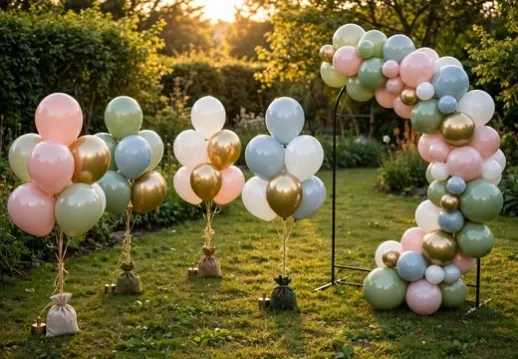
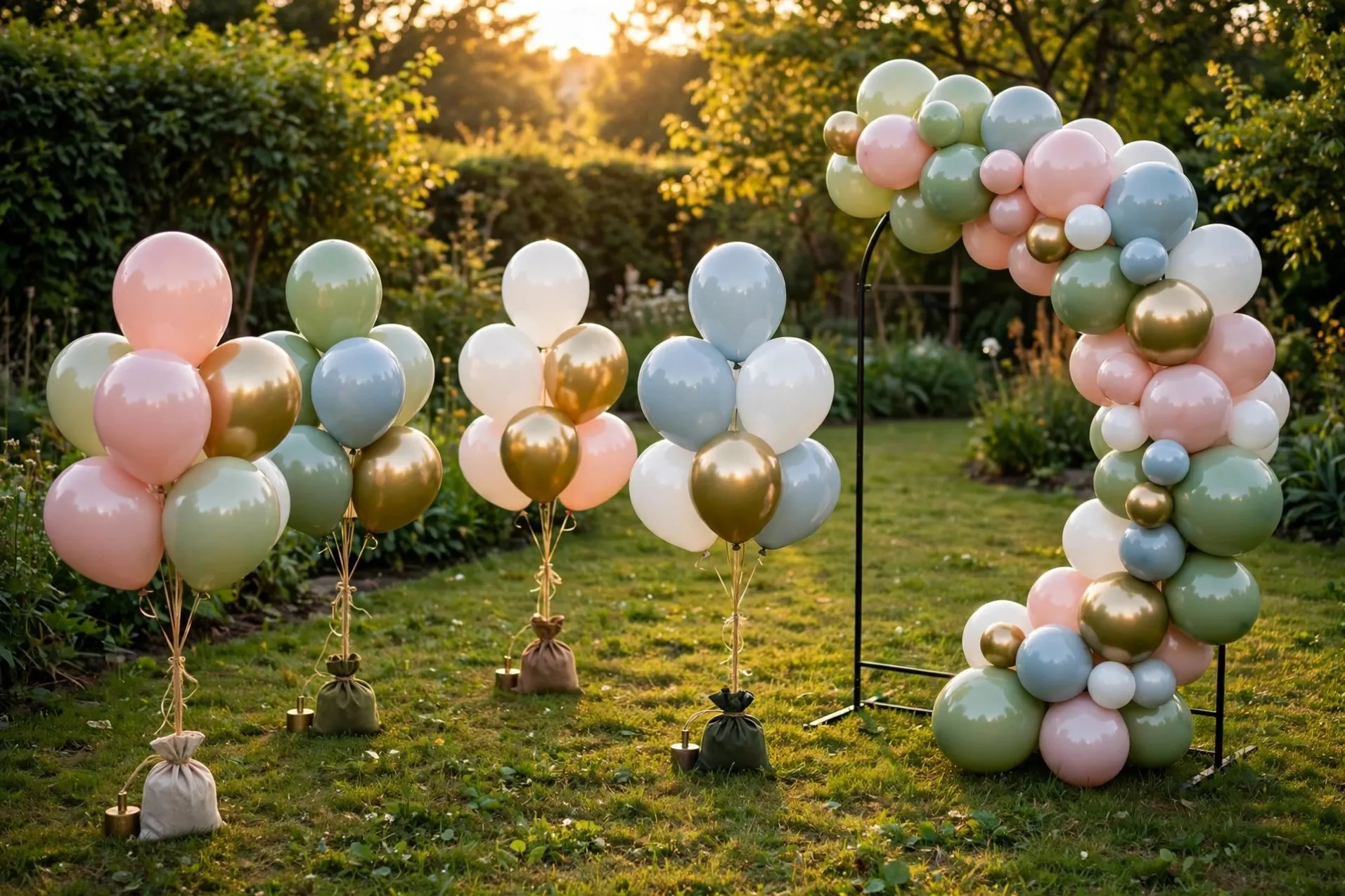
Helium is for floating accents. For anything that must stand outdoors all day — entrance arches, photo backdrops, fence and stage garlands — decorators switch to air-filled balloons on a frame or line.
Air-filled pieces do not depend on float, but sun, wind and heat still age latex outdoors. Build ahead indoors where you can, store pieces covered, and install outdoors close to the event. Our balloon arch guide covers quantities and methods.
A common hybrid: air-filled garland as the backbone, with a few helium balloons added fresh at the start of each event day.
Buying balloons for outdoor work
Outdoor jobs reward bigger sizes and tougher planning: 12" as the working size, 18" where display time matters. DecorateBalloons supplies both across the Standard range, with 10" and 12" also in Pastel finishes — all bagged, mixed orders available.
Not sure which combination fits your event? Send us a reference photo, the display size, where it will stand and when the event runs, through our contact page — we will help you confirm the product combination before you order.
Frequently asked questions
How long will helium balloons float outside in summer?
It depends on the size, the inflation, the temperature, the sun and the wind, so no single number is honest. Bigger balloons generally last longer in the same conditions. The reliable check is a test: fill a few of the actual balloons and time them in the actual spot.
My balloons looked deflated this morning but perked up by noon. Why?
Cold night air made the helium contract, so the balloons shrank and softened. As the day warmed, the gas expanded again and they regained some of their shape. Recovery on warming points to temperature — but it does not rule out a slow leak: a balloon that keeps shrinking in mild weather too should be checked for pinholes. Each night some helium also escapes for good, so older balloons recover less each time.
Should I fill balloons the night before an outdoor event?
It spends the balloons' best hours in the dark, plus a cold-night shrink cycle. Fill on site in the morning if you can. If early filling is forced, keep them indoors or under cover, use bigger sizes, and expect to replace some.
Are dark balloons a bad idea outdoors?
Not by rule. Dark latex absorbs more heat, so in direct sun a dark balloon runs hotter and may fail earlier than a pale one beside it.
How much it matters depends on the color, finish and exposure — test your actual colors in the actual sun, and shade the display where you can.